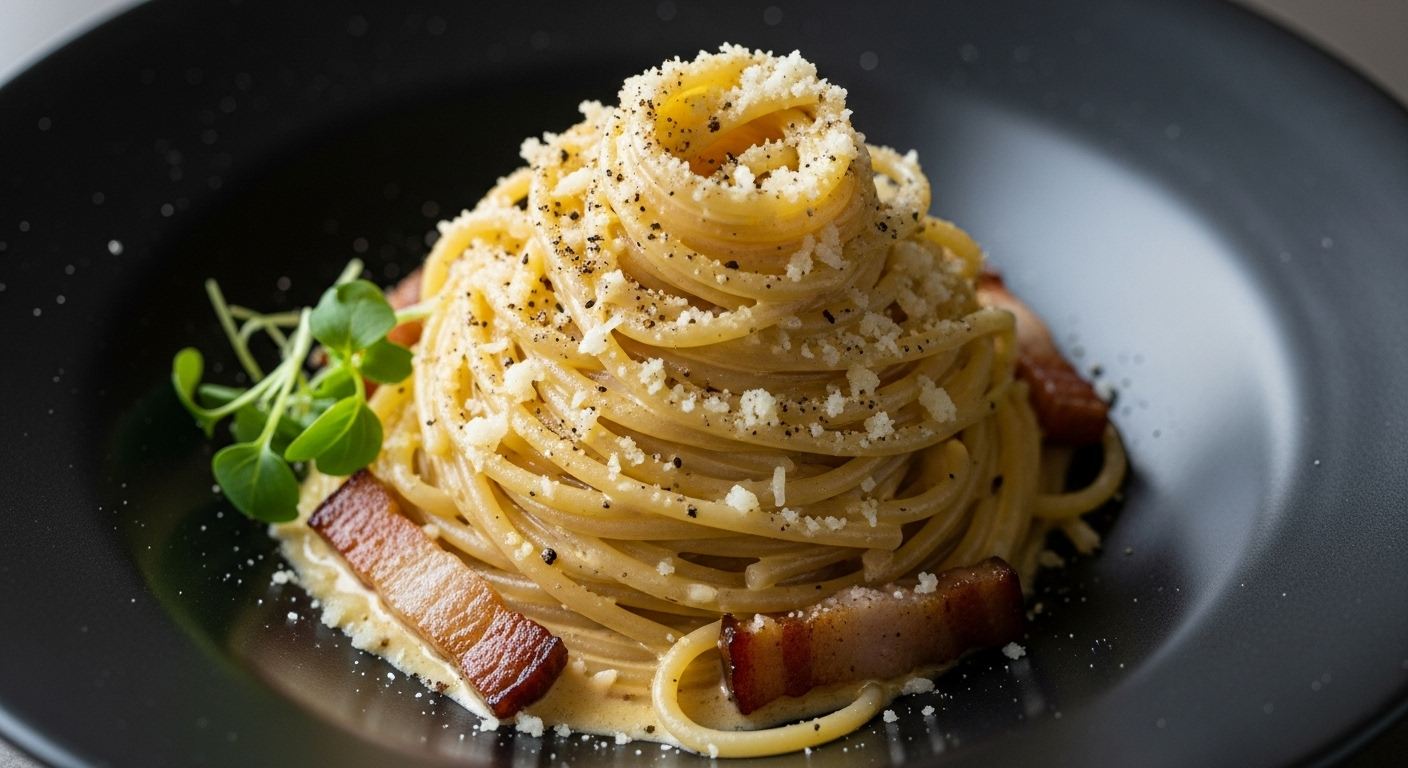
Unlock Authentic Carbonara: Master the Roman 5-Ingredient Recipe
There are few dishes in the culinary world as beloved, yet as misunderstood, as *spaghetti alla carbonara*. This iconic Roman pasta dish, a true testament to the beauty of simplicity, has captivated palates worldwide. However, the true essence of authentic Carbonara often gets lost in translation, with many recipes straying far from its traditional roots. If you're ready to experience a creamy, intensely savory, and utterly satisfying *spaghetti alla carbonara* just as they do in the bustling trattorias of Rome, you've come to the right place. We'll guide you through mastering this culinary masterpiece with just five humble ingredients, demystifying the process and unveiling the secrets to its unparalleled flavor.
The Roman Quartet: Carbonara's Place in History
*Spaghetti alla carbonara* isn't just any pasta dish; it's one of the four legendary pasta preparations that define Roman cuisine, standing proudly alongside Cacio e Pepe, Pasta alla Gricia, and Amatriciana. Each tells a story of ingenuity, using readily available ingredients to create dishes that are profoundly flavorful and deeply satisfying. Yet, despite its global fame, finding a truly authentic Carbonara outside of Italy can be a quest. This isn't due to complexity, but rather a persistent misunderstanding of its core principles and ingredients. Many popular adaptations, while perhaps tasty in their own right, diverge significantly from the genuine article, diluting its distinct character and creamy texture.
Debunking the Myths: What Authentic Carbonara ISN'T
Before we delve into the magic, it's crucial to address the common misconceptions that plague *spaghetti alla carbonara*. Understanding what doesn't belong is just as important as knowing what does.
The Cream Conspiracy
Perhaps the most egregious and widespread error in non-authentic Carbonara recipes is the addition of cream. Let's be unequivocally clear: there is absolutely **no cream** in traditional Carbonara. The rich, silky, almost ethereal creaminess that defines a perfect Carbonara comes entirely from the emulsification of egg, Pecorino Romano, pasta water, and the rendered fat of the guanciale. Adding cream not only makes the dish unnecessarily heavy and claggy but also mutes the delicate balance of flavors, robbing it of its signature Roman charm. Once you taste the real thing, you'll understand why cream is an unwelcome intruder. For a deeper dive into why ditching cream is essential, explore
Carbonara Secrets: Why Guanciale & No Cream Make It Authentic.
Bacon vs. Guanciale: A Flavorful Divide
Another common substitute that dramatically alters the taste profile is using bacon instead of guanciale. While bacon (pancetta, being cured pork belly, is a closer relative but still not ideal) can be delicious in many dishes, it simply doesn't compare to guanciale for Carbonara. Guanciale, cured Italian pork jowl (cheek), boasts a distinct, intense flavor and a much higher fat content than bacon. This fat renders down beautifully, releasing an incredibly aromatic and savory oil that forms the very backbone of the Carbonara sauce. Bacon lacks this depth of flavor and the crucial fat needed to create that signature richness, resulting in a sauce that feels thin and less complex.
Unnecessary Additions
Authentic Carbonara is a minimalist's dream. It thrives on the quality and interplay of its few core ingredients. Therefore, you won't find onions, garlic, mushrooms, or other herbs like parsley in a traditional Roman preparation. These additions, while delicious in other contexts, fundamentally alter the flavor profile of Carbonara, obscuring the delicate harmony created by the sacred five. Stick to tradition for an experience that truly sings.
The Sacred Five: Ingredients for True Spaghetti alla Carbonara
Now that we've cleared the air, let's focus on the stars of our show. The ingredients are few, but their quality is paramount to achieving an excellent *spaghetti alla carbonara*.
* **Spaghetti:** While spaghetti is the classic choice, its long, thin strands ideal for coating in the rich sauce, don't despair if you have other pasta shapes on hand. Rigatoni or Mezze Maniche, with their ridges and tubes, are excellent alternatives that capture the sauce beautifully. The key is using a high-quality, bronze-die extruded pasta, which provides a rougher surface for the sauce to cling to.
* **Guanciale:** This is the non-negotiable cornerstone of authentic Carbonara. Guanciale is cured pork jowl, offering a stronger, more complex, and richer flavor than pancetta (cured pork belly) or bacon. Its abundant fat is critical, rendering into a golden, flavorful oil that is essential for the sauce. You can typically find it whole or pre-sliced at Italian delis or specialty food stores. Remember to trim off the thick, hard skin before chopping it into small cubes or strips.
* **Eggs:** The creamy texture comes from eggs, specifically a combination of whole eggs and egg yolks, or sometimes just yolks for an even richer result. A common ratio is one whole egg and one or two additional yolks per serving. The yolks contribute richness and emulsifying power, while the whites help achieve a slightly lighter, glossier finish.
* **Pecorino Romano DOP:** Hailing from Lazio, the region encompassing Rome, Pecorino Romano is a hard, salty, and tangy cheese made from sheep's milk. Its robust flavor is fundamental to the savory depth of Carbonara. Always opt for DOP (Denominazione di Origine Protetta) certified Pecorino Romano to ensure authenticity and quality. If it's genuinely impossible to find, Parmigiano Reggiano can be used as a substitute, or a mixture of both for a slightly milder profile, but it won't be quite the same.
* **Black Pepper:** Freshly ground black pepper is non-negotiable. Its pungent aroma and subtle heat are crucial for balancing the richness of the guanciale and cheese, adding a spicy counterpoint that awakens the palate. Grind it just before adding for maximum impact.
Mastering the Technique: Crafting Your Creamy Carbonara Sauce
The beauty of authentic *spaghetti alla carbonara* lies not in complicated steps, but in precise timing and temperature control. It's a dance between hot pasta, rich fat, and delicate egg.
1. **Render the Guanciale:** Start by dicing your guanciale. Cook it slowly in a skillet over medium-low heat until it's golden brown and crispy, rendering out its precious fat. This process is key to developing flavor. Once crispy, remove the guanciale pieces and set them aside, leaving the rendered fat in the skillet.
2. **Prepare the Egg Mixture:** While the guanciale cooks and your pasta water comes to a boil, whisk your eggs (whole eggs + yolks) with a generous amount of freshly ground black pepper and finely grated Pecorino Romano. The mixture should be thick and somewhat pasty, ready to emulsify.
3. **Cook the Pasta:** Boil your spaghetti in generously salted water until al dente. This is crucial for texture. Before draining, reserve at least 1-2 cups of the starchy pasta water. This "liquid gold" is essential for creating the creamy sauce.
4. **The Emulsification Magic:** This is the most critical step. Immediately after draining, add the hot spaghetti directly into the skillet with the reserved guanciale fat. Crucially, **take the skillet off the heat** one to two minutes before adding the pasta. The residual heat from the pasta and the pan is what gently cooks the eggs without scrambling them.
5. **Combine and Stir Vigorously:** Pour your egg and cheese mixture over the pasta. Add a splash of the reserved pasta water. Now, stir vigorously and constantly with tongs or a spatula. The heat from the pasta will gently cook the eggs, and the starch from the pasta water will help emulsify everything, creating a glossy, creamy sauce that coats every strand. Add more pasta water as needed, a tablespoon at a time, until you achieve the desired consistency – it should be velvety and clinging, not runny or clumpy.
6. **Finish and Serve:** Stir in the crispy guanciale pieces you set aside. Taste and adjust seasoning if necessary (the guanciale and Pecorino are quite salty, so often no extra salt is needed). Serve immediately, garnished with an extra dusting of Pecorino Romano and fresh black pepper. The end result should be a creamy, glossy, and intensely savory masterpiece, where the eggs have cooked through the residual heat without scrambling.
Don't be afraid; making Carbonara isn't as tricky as it seems. The key is confidence in your stirring and mindful temperature control. For more detailed tips on achieving that perfect, unscrambled sauce every time, check out
Perfect Carbonara Every Time: Tips for a Creamy, Unscrambled Sauce.
Conclusion
Mastering authentic *spaghetti alla carbonara* is a rewarding culinary journey that connects you directly to the heart of Roman tradition. By honoring the "sacred five" ingredients and understanding the delicate dance of heat and emulsification, you can transform simple components into a dish of profound depth and satisfaction. Forget the cream, embrace the guanciale, and savor the simplicity. Your palate, and your guests, will thank you for unlocking the true, creamy, and undeniably authentic taste of Roman Carbonara. Buon Appetito!